
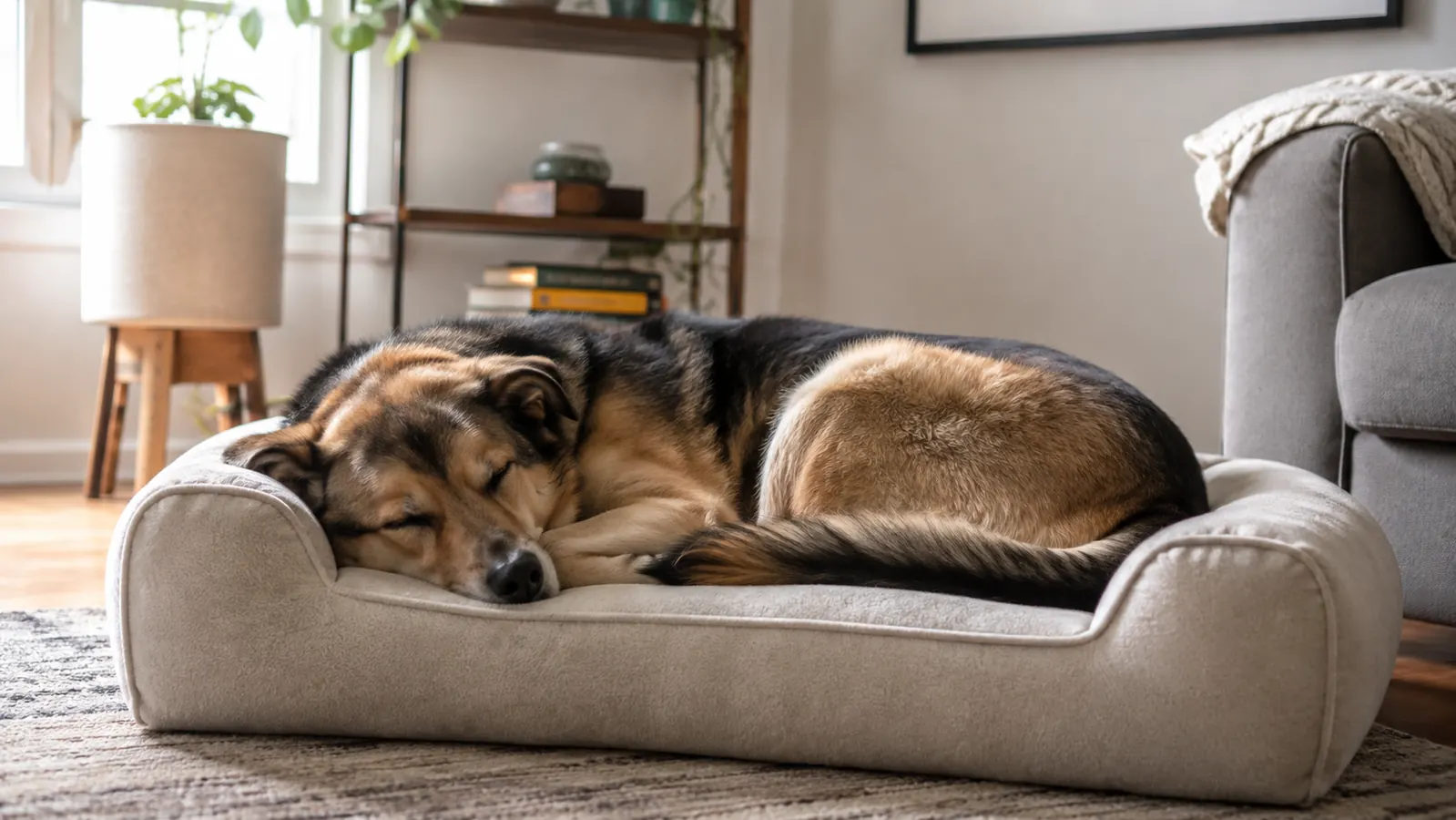
Dogs are not good at telling us when something hurts. They just get quieter about the things they used to love, and it is our job to notice. I have watched my dog Juno, an 8-year-old mixed breed who spent years on mountain trails with me outside Asheville, go from leaping off the back deck to pausing at the top of the stairs. She still has plenty of good days. But the way she settles into her bed at night tells me more than any vet visit could. When I finally switched her to an EHEYCIGA orthopedic bed, a lot of those small signs softened. If you are seeing any of the ten signs below in your own dog, their regular bed may be part of the problem.
I am not a veterinarian and none of this replaces one. But after eight years of living with a dog who is getting older, I have learned to recognize the difference between a dog who is comfortable and a dog who is just coping. Here is what I started looking for.
If Your Dog Is Showing Any of These Signs, a Better Bed Is the Easiest Place to Start
The EHEYCIGA orthopedic dog bed has a thick memory foam base and supportive sides. It is the bed I moved Juno to, and the one I would buy again.
Amazon Check Today's Price on Amazon →Your dog circles the spot for a long time before lying down
A little circling is normal. Juno used to turn twice and flop. When she started circling six or seven times, pawing at the bed, and rearranging it with her nose, it meant she was trying to make a hard surface softer. Dogs do this in the wild to flatten grass. They do it on a bed when the filling underneath has gone flat and there is no comfortable spot to be found.
Getting up takes longer than it used to
A young dog pops up like a spring. An older dog with tired hips often rocks forward onto her front legs first, pauses, and then pushes herself up. Juno started doing that after long trail days. What I noticed was that the harder the surface she had been lying on, the stiffer that first rise looked. On the nights she slept on the EHEYCIGA bed, the morning rise was noticeably smoother.
Your dog is stiff for the first few minutes after waking
It is normal for any of us to be a little slow right after waking up. But if your dog walks stiffly for the first five or ten minutes, takes small steps, or seems to warm out of it only after moving around, take note. That is the body telling you the joints did not get good support during the night. Juno used to come down the hall like she was walking on eggshells. About three weeks into using the EHEYCIGA bed, that first-morning stiffness got noticeably better.
Your dog chooses the floor over the bed
This one broke my heart. Juno started sleeping on the hardwood floor in the hallway instead of her bed. At first I thought she was hot. But she kept doing it in winter. A dog that avoids a soft bed because the bed has gone lumpy is not being stubborn. She is telling you the bed is no longer comfortable. A thick, supportive memory foam base gives a dog a reason to come back to the bed.
Your dog sighs and shifts position constantly through the night
There is a big difference between settling in for the night and not being able to get comfortable. If your dog is getting up, turning around, flopping down again, sighing loudly, and repeating that every couple of hours, they are not sleeping well. Juno did this for weeks before I figured it out. Good sleep matters for an older dog. It is when the body does its repair work, and a bed that lets them sleep through the night is doing real work.
Your dog lies flat instead of curling up like they used to
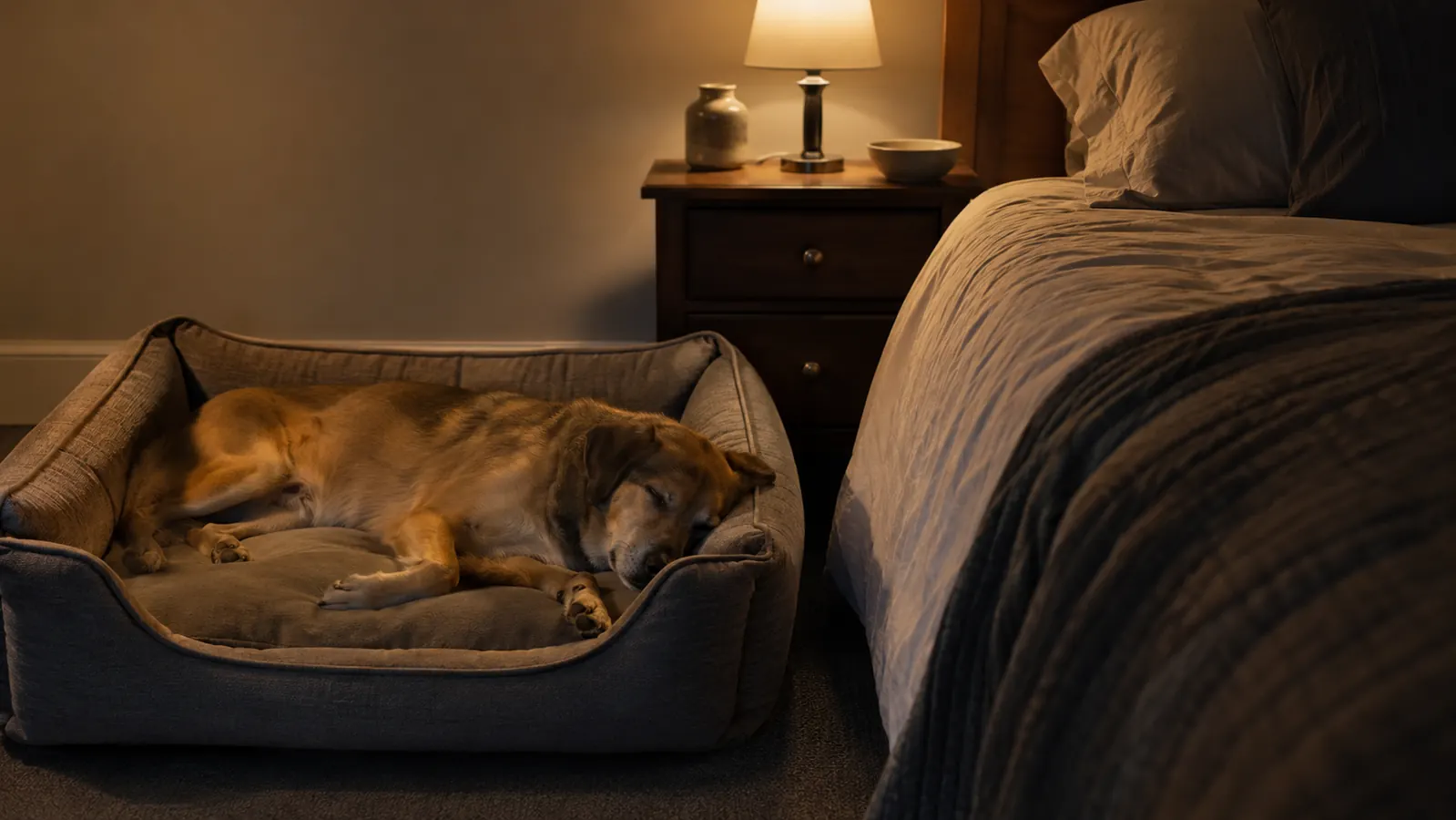
When a dog curls up tight, they are protecting their belly and conserving heat. When they suddenly stretch out flat on their side more often, it can mean their hips hurt and curling is uncomfortable. Juno used to be a tight curler. Now she sprawls out on the EHEYCIGA bed with her legs stretched behind her. She looks like she is melting, and I take that as a good sign. It means she found a surface that supports her whole body.
Your dog hesitates before jumping on the couch or into the car
That little pause at the edge of the couch before jumping up, the way they size it up first, that is a dog who knows the landing will hurt. Bed support affects everything else. When Juno's hips are well rested, she jumps into the car with confidence. When she has slept badly, she stands at the door and looks at me until I lift her back end. The bed does not fix everything, but it is the foundation.
Your dog is less interested in going for walks
An older dog slowing down is normal. But if your dog still wags her tail when you pick up the leash and then loses interest halfway down the driveway, that is not laziness. It is discomfort. Juno never turns down a walk, but she started choosing the shorter loop. Better sleep on a supportive bed gave her more energy for the walks she still loves. I will take any win I can get at this age.
You can feel the bottom of the bed through the padding
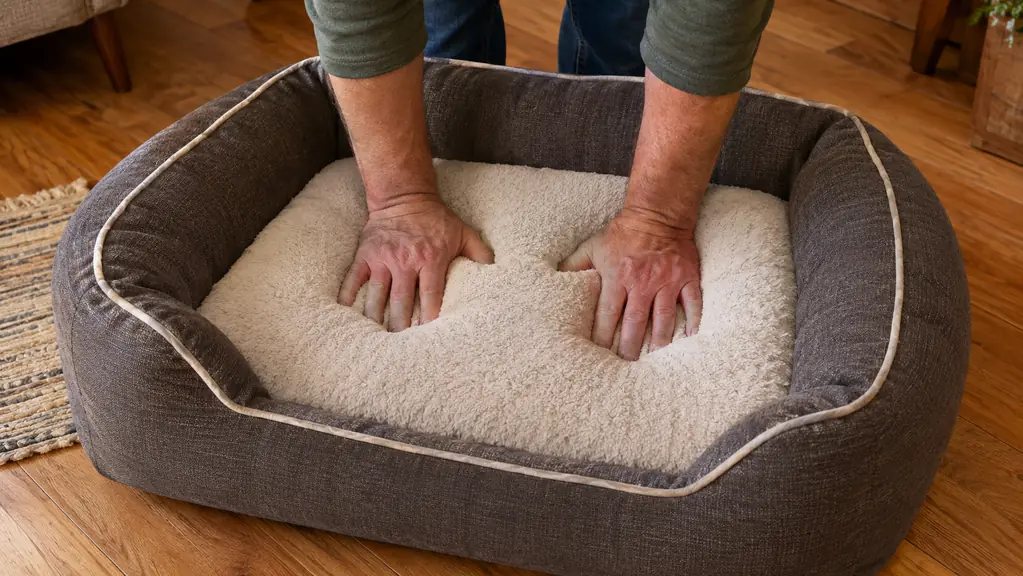
This is the easiest sign of all to check. Press your hand into the middle of your dog's current bed. If you can feel the floor through the filling, the bed is done. Memory foam wears out faster than we expect, and a bed that looks fine on the outside can be completely flat on the inside. The thick foam base in the EHEYCIGA bed is the whole reason I bought it. I pressed my hand in before Juno ever tried it and I could feel the difference immediately.
Your dog seems restless or uncomfortable even when everything else is fine
Sometimes there is no single dramatic sign. Your dog is eating fine, playing a little, and still seems off. They wander from room to room, lie down for five minutes, get up, move somewhere else, lie down again. That low-level restlessness is often a comfort problem. When I gave Juno a bed with real support and raised sides she could lean against, the wandering stopped. She picked one spot and stayed there. That is what a comfortable dog does.
What I'd Skip
I would skip buying another cheap flat bed just because it is on sale. I made that mistake once with Juno. It looked fine in the store and it was flat within three months, and then I was back to watching her circle and sigh. I also would not skip a vet visit if your dog is showing real stiffness or pain. A bed is comfort, not medicine. If your dog is genuinely struggling to get up, or crying out, or limping, that is a conversation for your vet, not a shopping decision. The EHEYCIGA bed handled the comfort part for Juno. The medical stuff stayed with the professionals.
Juno used to circle for a minute before lying down. About three weeks after I moved her to the EHEYCIGA bed, she started walking into the living room and flopping straight down. No circling. No sighing. Just sleep.
Your Dog Has Told You Enough. Now Give Them a Better Place to Sleep.
The EHEYCIGA orthopedic bed with memory foam and supportive sides is the bed I chose for Juno, and the one I would buy again without hesitating.
Amazon Check Today's Price on Amazon →