
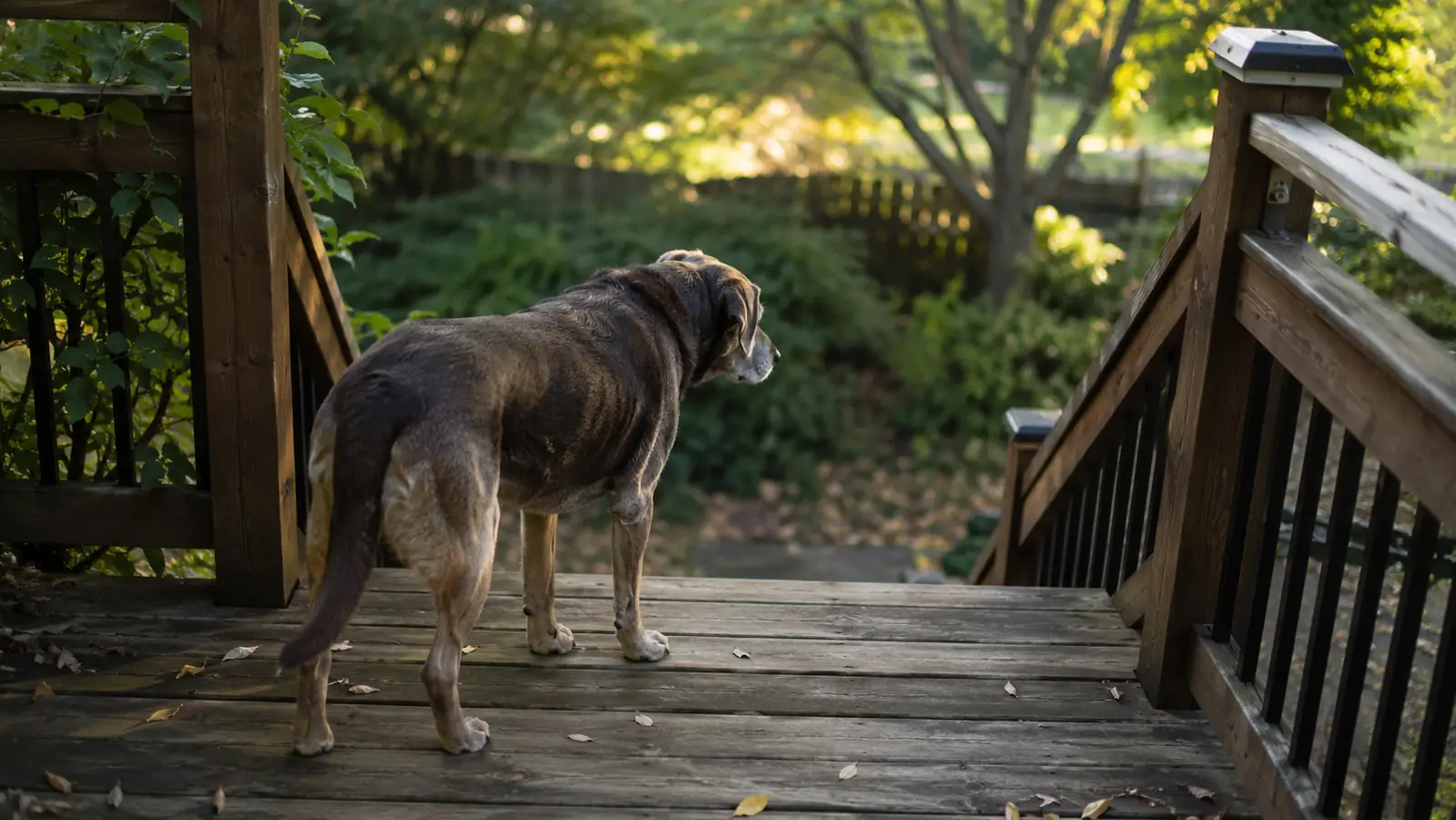
I'll be honest: I wasn't sure a joint supplement would do much. By the time Juno turned eight, she would stand at the top of our back deck and stare down the eleven stairs for a beat before she committed. She still ran the trail, but she got up from her bed like an old dog does, front legs first, with a little grunt. My vet, at the small practice twenty minutes from my house outside Asheville, said what she always says: stiffness in a 62-pound trail dog is not unusual, but that doesn't mean you just accept it. She suggested a supplement with real research behind it and told me to give it a full three months before making up my mind. That is how a bottle of Nutramax Cosequin chew tablets ended up on my kitchen counter in the first week of February. Six months later, I owe Juno a fuller answer than 'yeah, I think it helped.' This is that answer, the way I would give it to a friend at the kitchen table.
The version I bought is the Cosequin with MSM plus HA chew tablets, the 250-count bottle. There are plenty of joint products on the shelf, but Nutramax is the one my vet mentioned by name, and the active ingredients on the back are the ones with the longest track record in dogs. I have learned the hard way to read the label before I read the front of the box. That one habit has saved me from a lot of expensive mistakes.
The Quick Verdict
Six months of daily doses have not cured Juno's stiff hips, and I never expected them to. What they did do is make her more comfortable day to day: fewer pauses at the top of the stairs, easier getting into the car, and a steadier rise from her bed. For an aging trail dog, that is a real result. Nutramax Cosequin has earned a permanent place in her dinner routine.
Amazon Check Today's Price →See the Cosequin Formula We've Used Every Night for Six Months
This is the chew-tablet version with MSM and HA that sits in the kitchen cabinet here. It is also the one you can check on Amazon right now, where more than 79,000 owners have left ratings.
Amazon Check Today's Price on Amazon →How I've Used It
Before I added anything to Juno's bowl, I spent two weeks writing down what her stiffness actually looked like. This is not because I am the organized type. It is because memory lies, and I wanted a baseline I could trust. Every night I would record three little things: how long she paused at the top of the deck stairs, whether she braced her front legs before pushing up from her bed, and how easily she settled into a down on the kitchen floor. The baseline was not dramatic. She was never limping, and she never cried out. But she paused at the top of those eleven stairs almost every single night, and she had quietly stopped jumping into the back seat of my car. That second detail told me more than any limp could.
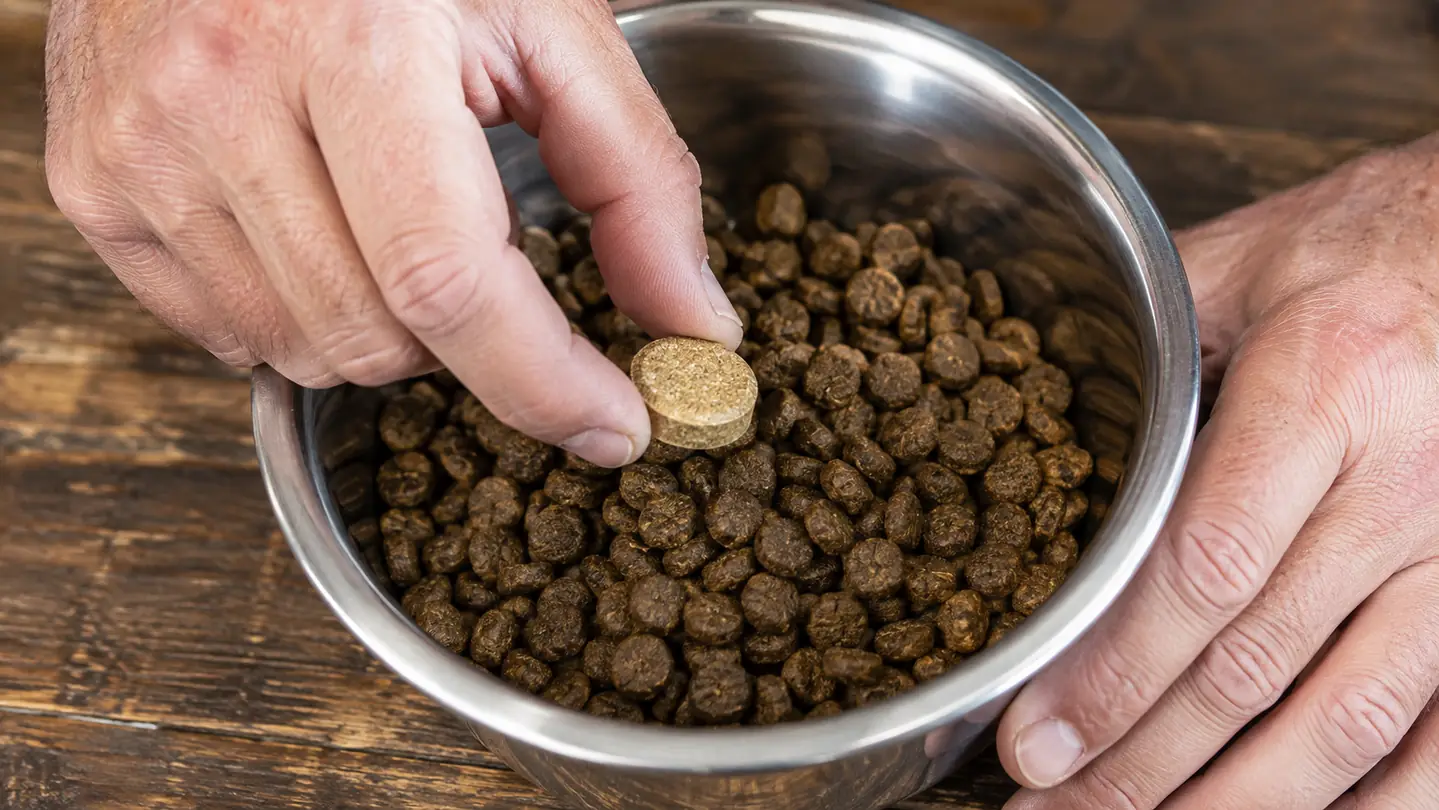
Juno started the supplement on a Monday in the first week of February. She takes her full dose with dinner, because dinner is the one meal she never walks away from, and because a chew on an empty stomach did not sit right with me. For the first few nights I broke the tablet in half and hid the pieces in her food. She ate around them. That was my first clue the taste was not going to sell itself. So I switched tactics and gave her the whole tablet from my hand just before her food bowl hit the floor. She now takes it, chews for twenty seconds or so, and looks at me like we have an arrangement.
I kept the routine deliberately boring. Same time, same place, same hand signal, no jackpot treats afterward. I wanted to know at the end of the trial whether the supplement did anything on its own, not whether I had built a new dinner ritual that made Juno feel like a good girl and move better because she was happy. I also promised myself I would not form an opinion until the end of three months. Anything less and I was just guessing.
What I Actually Noticed Over Six Months
The first real change has a date on it, and the date is about three weeks after we started. Juno and I were heading out for her evening walk. She got to the top of the back deck stairs, and she simply went down. No pause. No little sideways shuffle. No turning back to look at me as if she were pricing the effort. She just walked down the steps and stood at the bottom sniffing the azalea. I stood at the top with my mouth half open, because I realized somewhere in that week I had stopped noticing the pause. That was the moment I stopped rolling my eyes at the bottle.
By the six-week mark, the change I cared about most showed up in the car. Juno had spent months riding with her back feet on the floor of the back seat and her front paws on the seat itself, because she did not want to jump. Then one morning I opened the door and she launched herself onto the seat in one clean move. She did not float up like a puppy. She used her hind legs, and she did not whine, and she has done it most mornings since. That is not a cure. It is a dog whose hips feel a little more like her own.
At the three-month mark I accidentally did a test I had not planned. I left the bottle on the counter when I took Juno to my sister's house for a long weekend. By Sunday night she was not dramatically stiffer, but she was slower getting out of the car and she took the single porch step with extra care. It could have been the missed doses or just a weekend in an unfamiliar house with an unfamiliar yard. I cannot tell you which. I can tell you that I have not missed a dose since, and the steadiness has held.
Now that we are six months in, the stair pause is not gone. Juno still has mornings, especially after a cold night or a long rocky trail the day before, when she stands at the top and looks down. But those mornings are fewer, and when she does hesitate, she usually goes ahead within a few seconds. She also lies down more easily at night, folding her back legs under her without the slow, careful dip that used to make my chest hurt. Those small steady wins are the real story.
At about the three-week mark, Juno walked down the stairs without her usual pause. That was the day I stopped rolling my eyes at the bottle.
Reading the Label: Glucosamine, MSM, and HA
When I finally read the Cosequin label top to bottom, the three names that kept coming up were glucosamine hydrochloride, MSM, and hyaluronic acid, or HA. I am not a vet, and I am not going to pretend I can give you a chemistry lecture. What I can do is repeat what my vet explained in plain English. Glucosamine is one of the building blocks a dog's body uses to make cartilage, the cushiony material inside a joint. MSM is a sulfur compound that some research suggests supports normal joint function. HA is a component of joint fluid that helps keep things slippery. The logic behind putting all three together is that you are handing the body several materials it can actually use.
The part that marketing wants you to skim past is that a supplement is not a drug. It is not going to regrow cartilage, and it is not going to erase severe arthritis. In a dog whose joints are still in fairly decent shape, what it can do is make everyday movement more comfortable. I think that distinction is why so many people think joint supplements are a scam. They try one on a dog who is already in serious pain, expect a result like a pain pill, and when it does not come, they write off the whole category. The label on Nutramax's bottle does not make that promise, and neither do I.
One thing I respect about Cosequin is that the label tells you exactly how many milligrams of each active ingredient are in every chew. Not every supplement on the shelf does that. Some just list an ingredient with no amount, which tells you almost nothing about whether the dog is getting a useful dose. My vet has a saying: the amount matters as much as the ingredient. Six months of watching Juno has made me believe it.
Where Cosequin Didn't Win Me Over
Now for the part you do not see in the ads. Cosequin is not cheap, and it is not a one-time purchase. The 250-count bottle has lasted us several months, but it is a recurring line in the household budget, and it only works if you keep buying it and keep giving it. I mention this because a joint supplement is a commitment, not a fix. If the price makes you resentful every night, you will find reasons to skip days, and skipping days is how you get no results.
The biggest limitation is that Juno still has bad days. On the mornings after a long, rocky trail, she is stiff in the same way she was before we started. The supplement seems to raise the floor of her comfort, but it does not remove the ceiling. She is eight years old, and eight is not five. I have to keep my expectations lined up with what is actually reasonable for an aging dog who has logged thousands of trail miles.
She is also a picky eater, and I do not want to pretend she loved the chew from day one. It took about a week of whole-tablet-before-dinner before she stopped wrinkling her nose. If your dog is fussier than mine, Cosequin also comes in capsules you can open and sprinkle over food. I nearly switched to those during that first week. Juno came around before I had to.

How It Stacks Up Against Other Supplements I Tried
Before Cosequin, I tried a store-brand glucosamine chew that Juno refused to eat, and a powder that I mixed into her food and watched her leave in a sad puddle at the bottom of the bowl. I also added fish oil to her dinner for a while, which did great things for her coat and nothing at all for the stair pause. The biggest difference with the Nutramax chew is that she actually takes it. All the active ingredients in the world do no good if the dog will not swallow them, and I learned that the slow way.
I cannot tell you whether Nutramax is the only brand worth trying. I have not tested every bottle on the shelf, and I do not get paid to have an opinion about all of them. What I can tell you is that this is the one my vet named without hesitation, the one with the ingredient amounts printed on the label, and the one my picky dog has taken every night for six months. That combination is harder to find than it sounds.
What I Liked
- Chew tablet Juno will actually take, which matters more than any ingredient on a label
- Label lists milligram amounts, so you know what your dog is getting
- Noticeable difference in stair hesitation and getting into the car within about three to six weeks
- Brand my vet recommended by name and one with decades of use behind it
- Chewable format makes daily dosing simple and easy to stick with
Where It Falls Short
- Ongoing cost adds up, and consistency is mandatory for results
- Still has stiff mornings after hard trail days, so it is not a cure
- Flavor is not a winner with every dog, picky eaters may need capsules or a transition week
- It takes weeks or months to judge, so it is not for someone who wants overnight results
Who This Is For
If your dog sounds like Juno, with stiffness that shows up as a pause at the top of the stairs or a grunt when she stands rather than an actual limp, Cosequin is a reasonable thing to try. I would consider it especially if your vet has mentioned early joint changes, or if you have an active dog who is starting to slow down. It is also a good fit if you are willing to wait for an answer. Give it two or three full months before you judge it. This is not a see-it-in-three-days product.
Start with a simple baseline, as boring as that sounds. Write down where your dog hesitates and how she gets up. Then give the supplement the same time and same routine you would give any other health experiment. That baseline is the only way you will know if a change is real or just a good week.
Who Should Skip It
If your dog is limping, refusing to put weight on a leg, or clearly in serious pain, do not reach for a supplement first. That is a conversation for your vet, and it might be a conversation that needs x-rays. A supplement is not a pain reliever, and it is not a way to avoid a diagnosis. I would also skip Cosequin if you are not prepared to give it daily for months. An occasional chew will probably not tell you anything useful, and you will end up disappointed for no reason.
If Your Dog Hesitates at the Stairs, This Is the Formula We Use
I can't promise Cosequin will do for your dog what it did for Juno. I can tell you that after six months, I keep the bottle stocked and I do not plan to stop. See today's price and owner reviews on Amazon.
Amazon Check Today's Price on Amazon →